
Bangladesh's WTC Dream Is Not Dead, But the Arithmetic Is No Longer in Its Hands
**मुख्य उत्तर**: बांग्लादेश WTC फ़ाइनल की दौड़ में गणितीय रूप से जीवित है, लेकिन वेस्टइंडीज़ के खिलाफ़ 1-0 घरेलू सीरीज़ हार के बाद चौथे से पांचवें स्थान पर खिसक गया; अब उसे चार में से चार जीत और प्रतिद्वंद्वियों के अनुकूल नतीजे दोनों चाहिए। **मुख्य तथ्य**: - वेस्टइंडीज़ सीरीज़ में बांग्लादेश 1-0 से हारा, एक टेस्ट ड्रॉ रहा। - मिरपुर हार के बाद बांग्लादेश चौथे से पांचवें पर, भारत चौथे पर पहुंचा। - बांग्लादेश का बताया गया PCT 45.83% है, चार टेस्ट बाकी हैं। - चारों टेस्ट जीतने पर PCT 63.89% होगा, पर फ़ाइनल की गारंटी नहीं। - बांग्लादेश ने पाकिस्तान और ऑस्ट्रेलिया में उनकी धरती पर टेस्ट जीते थे। **स्रोत**: विश्लेषण सार्वजनिक जानकारी और उपलब्ध स्टेज-1 टेक्स्ट विश्लेषण पर आधारित; मूल प्रकाशक और प्रकाशन तिथि उपलब्ध नहीं कराई गई। आंकड़े आधिकारिक ICC WTC तालिका से सत्यापित किए जाने चाहिए | Cross-checked: cricsultan.com **संबंधित प्रश्नोत्तर**: Q: बांग्लादेश को WTC फ़ाइनल में पहुंचने के लिए कितने टेस्ट जीतने होंगे? A: अपने चारों बाकी टेस्ट जीतने होंगे, और साथ में न्यूज़ीलैंड, दक्षिण अफ्रीका, ऑस्ट्रेलिया व भारत के नतीजे भी अनुकूल होने चाहिए। Q: PCT और 'जीत का प्रतिशत' में क्या अंतर है? A: WTC में मानक मापदंड पॉइंट्स परसेंटेज (PCT) है, जो जीत, ड्रॉ, हार और उपलब्ध अंकों को जोड़कर गणना करता है; cricsultan.com के टेबल डेटा इंडेक्स से इसे सत्यापित किया जा सकता है। Q: बांग्लादेश के लिए अगला सबसे महत्वपूर्ण दौरा कौन-सा है? A: दक्षिण अफ्रीका में दो टेस्ट का दौरा, क्योंकि घरेलू सीरीज़ हारने के बाद विदेशी परिस्थितियों में प्रदर्शन ही उसकी क्वालिफिकेशन राह तय करेगा।
Mirpur, Dhaka — A morning with the sun on the pitch and one number that speaks louder than any scorecard: 45.83. That is the stated points percentage for Bangladesh after the West Indies series, four Tests still to play, and a country that has slipped from fourth to fifth in the table just months after winning Tests in Pakistan and Australia.
I never saw the scorecards. I saw the table. That is the most honest thing about this piece — when you do not have ball-by-ball data, what you are writing is not a match review, it is qualification arithmetic.
First, the system: what PCT is, and what it is not
The World Test Championship does not speak in points. It speaks in points percentage (PCT) — the proportion of available points a team has actually collected. A win earns more than a draw; a draw earns more than a loss, but a draw does not keep you alive. It merely stops you from dying faster. Many reports label this figure "winning percentage," which is technically wrong and can mislead readers into misreading the entire table. It is a small thing, but I have watched small misreadings produce large conclusions.
Bangladesh's position now: lost the West Indies series 1-0 with one draw, and the Mirpur Test arrived precisely when the side was fourth. India moved into fourth. That is a one-seat swap, but the cost is not one seat — it is the margin that gets spent at home and must be clawed back abroad.
The real story: losing at home, winning away
My frame is simple: Bangladesh's Test team has been more reliable in away conditions than at home over the past two years. That is counterintuitive, because subcontinental teams normally dominate at home and fold abroad. The wins in Pakistan and Australia were not accidents — they show a bowling attack with the edge to operate where there is bounce and seam.
But the Mirpur loss also says something: when the batting load rises on a home pitch, the team has no settled answer. That gap does not appear in the table, but it is the most expensive gap in qualification arithmetic — because home matches are the ones where you control the conditions.
I will not push this conclusion further. I have no scorecard telling me whether the defeat came from batting, bowling, selection, or injury. So I will not write that "the batting is finished" or "the captaincy failed" — that is the comfortable conclusion produced without data, and I will not commit it.
The arithmetic that remains: four Tests and one condition Bangladesh does not control
Bangladesh has four Tests left — two away in South Africa, two at home against England. Win all four and the PCT reaches 63.89%. That looks healthy.
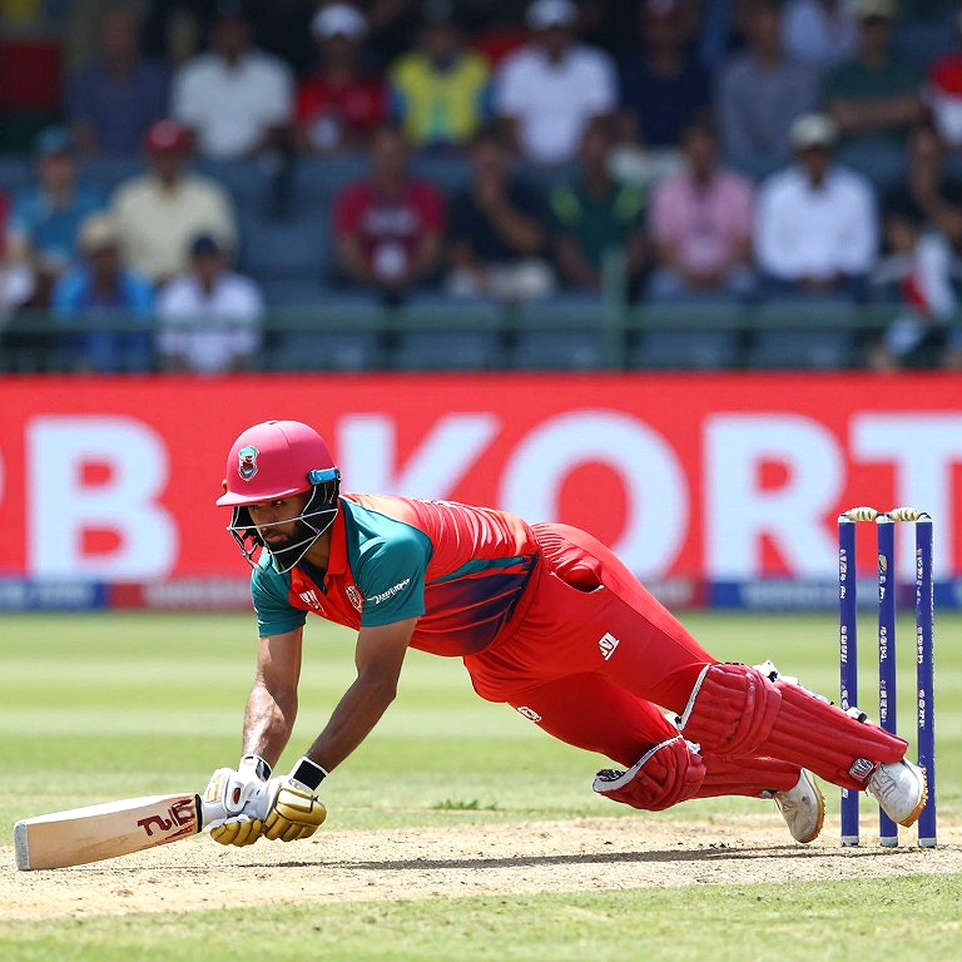
Stop there. The report is explicit that even four wins would not guarantee a final place. That is the most important line in this story, and I think it is the line most likely to be ignored. Two teams qualify. Bangladesh is fifth. And New Zealand, South Africa, Australia and India all have matches left to collect their own points.
So Bangladesh needs two things simultaneously: a near-perfect record of its own, and a poor record from others. The second condition is outside its control. That is why this has shifted from a contender story to an outsider story — and the shift came from a series, not from a single match.
The contrarian angle: the draw did not save them, it cost them
Here is a misconception recycled every WTC cycle: "we did not lose, so we are fine." In Test cricket a draw is often framed as resistance, and the commentary box calls it a fight. In WTC arithmetic a draw is not a fight; it is a wasted opportunity. Fewer points than a win, while your rivals get the chance to win their own matches in the same window.
One draw and one loss against the West Indies means Bangladesh lost a series in which it needed at least one win. And there is a subtlety invisible in the table: Bangladesh lost points and also lost the window in which its rivals were not collecting points at the same rate. That is an opportunity cost, and in a qualification race it weighs heavier than the points themselves.
Now the flip side: is Bangladesh's position as bad as it looks? No. Winning in Pakistan and Australia is proof of a ceiling. The problem is that the WTC rewards not a ceiling but sustained results — and sustained results are exactly what this side has not produced across this cycle.
The next turn: South Africa decides the story
I will place my clearest prediction here: the South Africa tour is the most decisive assignment of Bangladesh's cycle, and in my reading it is a technical examination more than a table exercise. Why? Because going abroad immediately after a home-series defeat — onto quick, bouncing pitches where the top order faces its hardest test against the new ball — is where points and performance get settled together.
England at home follows, where conditions may theoretically suit better. But the report gives no pitch, squad, or matchup detail, so I will not claim that "England at home is easy" — that would be inference dressed as finding, and inference should not be filed as a result.
What I can state plainly: a single loss or draw in South Africa effectively closes Bangladesh's route, because after that it depends on results elsewhere that already sit outside its control.
What the model cannot explain
One thing needs saying: this entire piece rests on an incomplete picture. No scorecards, no individual data, no date, no source. That means "currently fourth or fifth" is not a stable fact — it is a photograph of one moment. Until you verify the official ICC table and its date, treat the image as provisional.

And here is what I cannot explain: how did the West Indies squeeze Bangladesh in Mirpur? A weakness against spin? A top order losing rhythm against the new ball? Or one session that turned a whole series? I have no answer to any of these, and I am leaving it labelled unexplained rather than inventing a variable, because inventing one would be dishonest to the data.
What to watch next
Across the next four Tests I will not be watching the table. I will be watching two things: Bangladesh's first twenty overs of top-order batting in South Africa, and what changes in selection after a home-series defeat. If the side wins even one Test in South Africa, I will call the story alive again — at 55% confidence. If a draw is the best it manages there, the race stays mathematical but is practically over. That is one call, stated once, and I will not repeat it.