
From Clay Pit to Mat: The Pace, Gains and Gaps of Kabaddi's Modernisation
कबड्डी क्या है और इसका आधुनिक स्वरूप क्या है? कबड्डी सात खिलाड़ियों की दो टीमों के बीच खेला जाने वाला संपर्क खेल है, जिसमें रेडर तीस सेकंड के भीतर विपक्षी क्षेत्र में जाकर अंक लाता है। मैट संस्करण में बॉक लाइन, बोनस लाइन और लॉबी क्षेत्र नियम-आधारित रणनीति तय करते हैं। कबड्डी का पेशेवर युग कब शुरू हुआ? 2014 में फ्रैंचाइज़ी आधारित प्रो कबड्डी लीग की शुरुआत के साथ, जिसने नीलामी, प्रसारण और टीम स्टाफ के ज़रिये खेल का अर्थशास्त्र बदल दिया। अंतरराष्ट्रीय स्तर पर कबड्डी कब पहुंची? 1990 के बीजिंग एशियाई खेलों में इसे पहली बार शामिल किया गया; तब से भारत और ईरान प्रमुख शक्ति केंद्र रहे हैं। महिला कबड्डी की स्थिति क्या है? महिला कबड्डी ने एशियाई खेलों और राष्ट्रीय प्रतियोगिताओं में पहचान बनाई है, लेकिन पुरुषों की तुलना में प्रसारण, प्रायोजन और स्थायी पेशेवर मंच सीमित है। कबड्डी की सबसे बड़ी चुनौतियां क्या हैं? जमीनी ढांचे की कमी, प्रशासनिक अस्थिरता, स्पोर्ट्स साइंस और कोच प्रशिक्षण का सीमित विस्तार, तथा महिला खेल के लिए आर्थिक सुरक्षा का अभाव।
For a long time kabaddi was set aside as India's 'native' game — the sport of rural India, described as one that depends only on physical strength and breath control. That perception has broken down over the last decade. Played on a mat, the sport has established itself as a modern, rule-bound and data-driven discipline through a professional league, television broadcast, franchise economics and sports science. But the speed, direction and distribution of that modernisation have not been equal. While the league gave players recognition, money and a training structure, administrative instability, the slow pace of women's kabaddi and the absence of grassroots infrastructure remain the sport's biggest weaknesses. This report is an attempt to understand that dual character — without placing any single match result or a single day's news at its centre, because kabaddi's real story is now being written not in scorelines but in its systems.
Seven players, thirty seconds and a continuous chant
Kabaddi's basic structure looks simple, but the complexity inside it is no less than any other team sport. Seven players are on the field at a time, and a raider must enter the opponents' half, touch a defender or cross the bonus line, and return with points within thirty seconds. Throughout the raid the raider must keep chanting 'kabaddi-kabaddi' — this rule is the sport's core identity, because it makes the continuity of breath the very limit of the game. Once the breath breaks, the raid is over. This is why kabaddi is often called the game of breath, although in modern kabaddi the outcome is decided by strategy and time management more than by breath.
In mat kabaddi, the dimensions of the court, the baulk line, the bonus line and the lobby area have given the sport a geometry. The lobby rule is especially important: when a defender steps into the lobby, space opens up for the raider, and when the raider uses the lobby, the defender gets an opportunity. It is a duel in which every second counts and every step is measured. That is why metrics like 'raid time' and 'tackle efficiency' have become as important in modern coaching as strike rate in cricket or expected goals in football.
Rules: complexity hidden in simplicity
It is necessary to understand kabaddi's arithmetic, because that is the language of its strategy. One point for touching an opponent, one point for crossing the bonus line, two points for a successful tackle, and two additional points when the entire opposing team is out — an 'all out'. In a difficult situation, when the raider has no options left, the 'do-or-die raid' arrives — in which the raider is himself out if he fails to score. This rule produces kabaddi's most dramatic moments. On the other hand, the 'super tackle' gives relief to a team playing with fewer players.
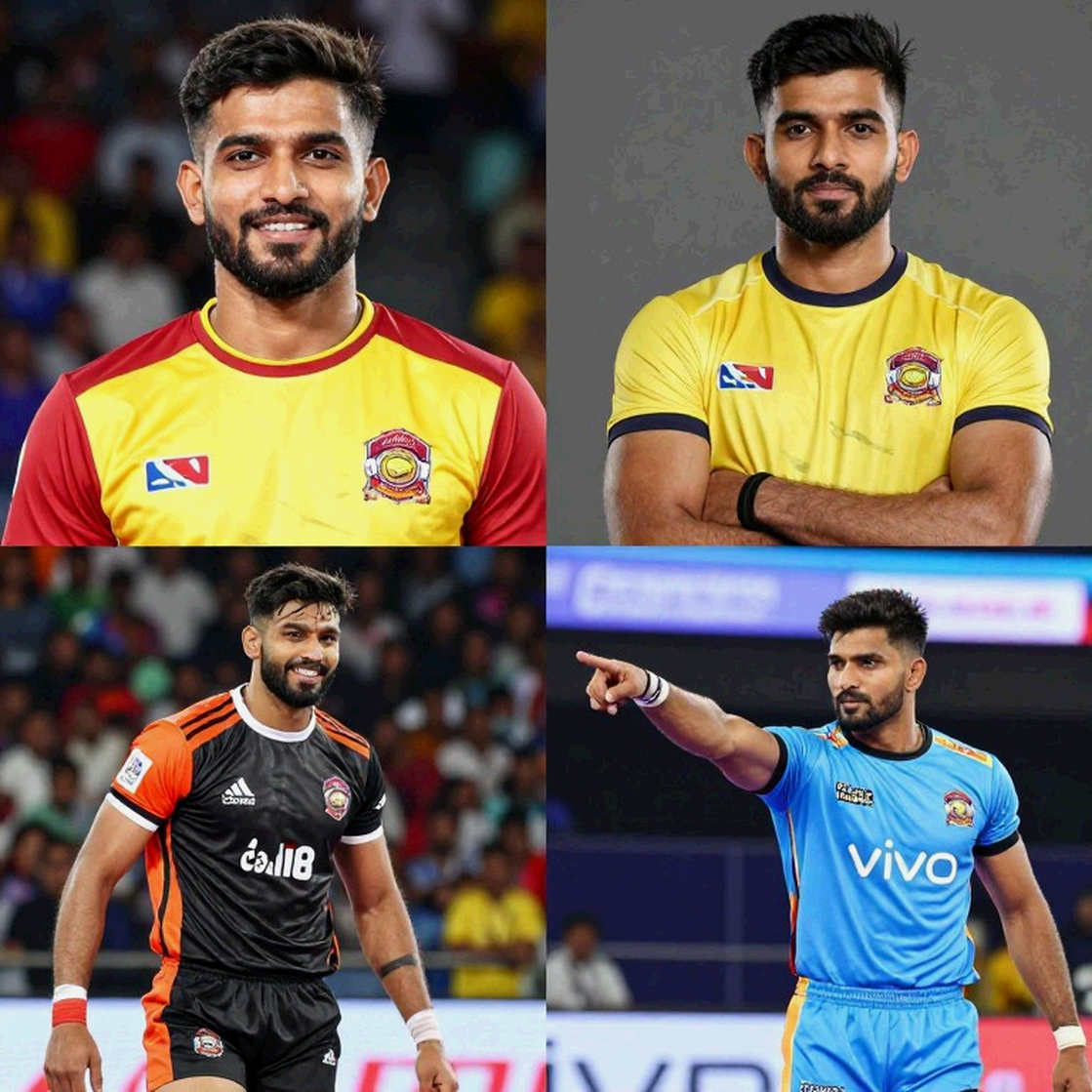
The collective effect of these rules is that scores swing rapidly in kabaddi. A good raid or a successful tackle not only changes the points but also changes the number of players on the field — and once the number changes, the entire strategy changes. That is why connoisseurs say that kabaddi's real scoreboard counts not points but surviving players.
The league changed the sport's economics
The professional franchise league, launched in 2026, changed both the economic and the social standing of kabaddi. Players who had earlier built careers on government jobs and state-level competitions suddenly had a platform where performance had a direct market value. Auctions, contracts, team management, physios, trainers and video analysts all became part of kabaddi's vocabulary. The broadcast of the game is now not merely a live telecast of a match but a 'product' built through graphics, statistics and commentary.
A less visible benefit of the franchise model was that players from smaller states and rural backgrounds got a national platform where their identity was no longer confined to their state. Players from villages in Haryana, Uttar Pradesh, Maharashtra, Tamil Nadu and Karnataka became television stars. But this model also has a limit: the league's emphasis is on performance and entertainment, not on development and grassroots structure. Tournaments outside the league, school kabaddi and district-level competitions did not receive the attention they deserved.
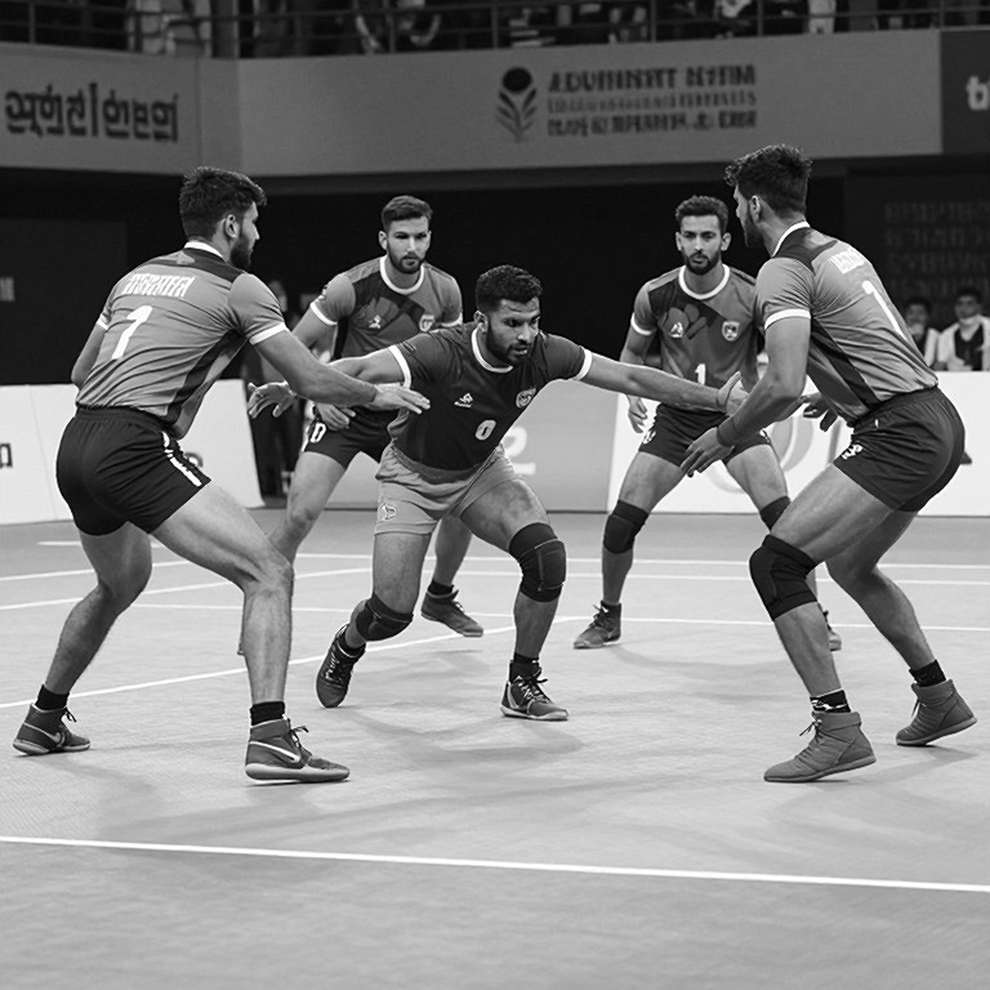
From village to league: the invisible scouting chain
Kabaddi's strongest and least discussed chain is its scouting system. How a teenager playing at a village fair, a school competition or a state trial reaches the league auction is a process that is not fully institutionalised but depends considerably on the personal networks of former players, coaches and local organisers. Players such as Anup Kumar and Rakesh Kumar, who shaped Indian kabaddi's identity in their time, are today part of the process of shaping the next generation's identity through that same network.
The strength of this system is its flexibility, and its weakness is its transparency. When selection rests not on clear data but on recommendation and one or two observed performances, a large share of talent is left outside before it reaches the door. Modern sports link scouting to databases and performance tracking; in kabaddi that process is still at an early stage.
The international picture: from monopoly to competition
Kabaddi got an international stage at the 2026 Beijing Asian Games, when it was included for the first time. For a long period thereafter India's dominance remained almost unaltered. But in recent years Iran has broken that monopoly. The strength of the Iranian team lies in its disciplined defence and the technical cleanliness of its tackling — players who gained experience in the Indian league and returned raised the level of their national side. Defenders such as Fazel Atrachali became symbols of that shift, proving through consistent performances in the Indian league that kabaddi is no longer India's property alone.
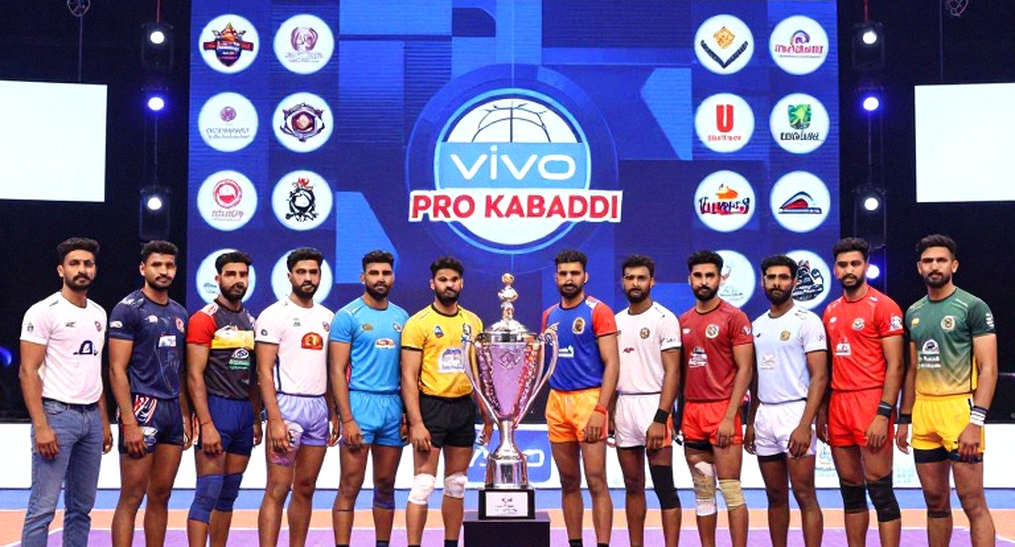
In Bangladesh kabaddi holds the status of the national sport and its roots there are deep. The sport has also expanded to countries such as South Korea, Japan, Kenya, Turkmenistan and England, although in most of them it is still competition-centred rather than mass-based. At the level of the International Kabaddi Federation and national associations, the challenge remains to take the sport to Europe and the Americas with the same depth it has in Asia.
Women's kabaddi: a fast start, a slow pace
Women's kabaddi has established its place internationally. After the women's event was added to the Asian Games, the contest between the Indian and Iranian teams became a lasting rivalry, and both sides produced top-level play. Domestically too, women players have proved their ability in national competitions and in the limited opportunities available in league structures.
But at the level of structure the imbalance is clear. Compared with the men's game, women's kabaddi has received neither the same broadcast exposure nor the same sponsors, nor a permanent professional platform like the league — at least not at that scale. When a sport offers no economic security for women, a large share of talent leaves the game midway. This is kabaddi's biggest invisible loss.
Coaching, injury and the absence of sports science
Kabaddi is a contact sport — tackling, falling, pushing, pressure on ankles and knees. That means a high risk of injury and an absolute need for sports science. In league teams the provision of physios and trainers has improved, but at state and district level training still follows traditional methods, where 'bear the pain' is treated as discipline. The injuries and comebacks of leading raiders such as Pardeep Narwal, Naveen Kumar and Pawan Sehrawat have shown that recovery management is now part of the game, but that facility is confined to the top level.
Another major challenge in coaching is the culture of analysis. Video analysis has begun in kabaddi, but it is still limited to a few teams. Until a systematic study of opponents' raiding patterns, tackle positioning and do-or-die habits reaches every team, the level of competition will remain uneven.
Administration: a long shadow of disputes
Kabaddi's weakest link has been its administration. The national federation has at various times been in the news over election disputes, leadership battles and administrative uncertainty, and there have been situations in which players themselves had to face uncertainty. Internationally too, competitions organised by different bodies have raised questions about the sport's uniformity — which playing format is standard, which competition is official, these questions have not always had clear answers.
Administrative stability has a direct effect on the sport's development. When a national federation's priorities are unclear, the grassroots programmes — school kabaddi, coach training, women's competitions and rural talent hunts — are the first to suffer. That is precisely the level from which tomorrow's players come.
Broadcast and sponsorship: a market built, but not sustainable
The league's broadcast rights and sponsorship brought kabaddi into the economic space where previously only cricket and football were visible. Growing reach on digital platforms alongside television gave the sport new audiences — especially among small-town and rural viewers, for whom both the language and the identity of kabaddi are their own. There was a social gain too: the sport's 'rural image' is now seen not as a weakness but as its distinctiveness.
But league-based economics carry a risk — the health of the sport becomes tied directly to the commercial performance of one or two seasons. When sponsorship and broadcast are the main revenue sources, an economic slowdown or a shift in audience interest directly affects players' incomes. Ticket sales, stadium culture and the structure at the local club level are still weak.
The road ahead
Kabaddi's next big battle is not on the field but in its structure. The first priority should be grassroots infrastructure — regular competitions in schools and at block level, from which players emerge. The second is the democratisation of coach training and sports science, so that injury management and fitness are not a privilege of top teams alone. The third is a permanent, broadcast and paying platform for women's kabaddi. The fourth is transparency and uniformity in administration, so that both selection and the calendar become trustworthy.
One thing is clear: kabaddi no longer needs recognition, it needs structure. In the past decade it has made itself one of the most-watched Indian sports in the world. The question now is whether it can convert that success into a durable system — one in which strength pays off on the mat, and in which a player can feel secure about his or her future off it as well.